"The water from your tap can endanger your child."
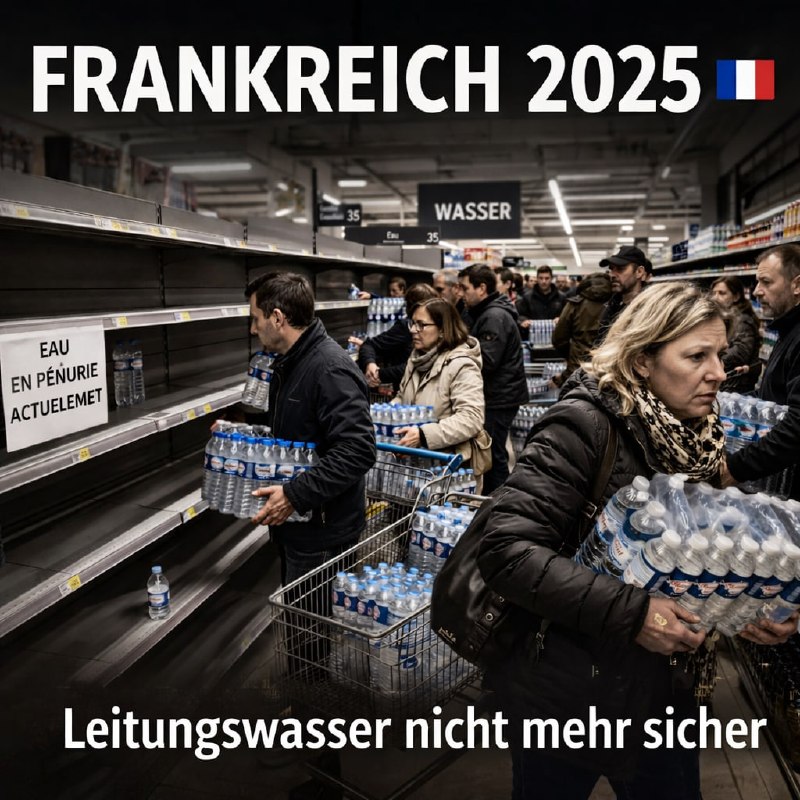
Thousands of people in Saint-Louis (France) were confronted with exactly this message over the course of months last year. From one day to the next, nothing was taken for granted anymore: for particularly vulnerable groups – infants, pregnant women, nursing mothers, and immunocompromised people – tap water was banned, affecting a total of around 60,000 people. What followed reminded people of times of crisis: empty shelves, people with shopping carts full of water bottles, uncertainty about what is actually still safe. The reason was PFAS in drinking water – so-called "forever chemicals" that do not break down and accumulate in the body.
The ban came into force on April 25, 2025, and was originally supposed to last at least until the end of the year. Months later, water could be released again for the first municipalities through the use of filter systems.
Overnight, something became clear that many had long ignored: water is not automatically safe. Within a short time, filter systems were installed, the first municipalities could be reopened, and the contamination was reduced below limit values through filtration. At the same time, around 20 million euros were invested to get the problem under control in the long term. This case thus demonstrates two things simultaneously: the problem is real – and it is solvable. What matters is not whether something is in the water, but whether it is removed.
👉 What exactly PFAS are and why they are so problematic.